
How Motors Are Used in Dental Implant Systems
Many people assume the motor in a dental implant system is simply responsible for rotation speed. In reality, the motor plays a much more critical role — it directly affects torque stability, surgical safety, and the overall performance of the implant procedure. For dental device manufacturers, understanding how the motor functions inside the system is essential for building reliable and precise equipment.
The Role of Motors in Implant Systems
The Role of Motors in Implant Systems In a dental implant procedure, the motor is responsible for driving the drilling process into the bone with controlled speed and torque. But unlike general industrial applications, implant systems require much higher precision and consistency.
The motor must:
- Deliver stable torque under varying load conditions
- Maintain smooth rotation during drilling
- Respond accurately to control signals from the system
Any instability can directly impact surgical outcomes.
Why Torque Stability Matters More Than Speed
In implant applications, torque control is more important than high speed. During drilling, the resistance from bone changes continuously. If the motor cannot maintain stable torque:
- The drilling process may become uneven
- The system may trigger errors or stop unexpectedly
- In worst cases, it can affect surgical precision
This is why implant systems often rely on motors that provide consistent torque output rather than just high RPM.
Need motor selection? Email to info@fingeractuation.com
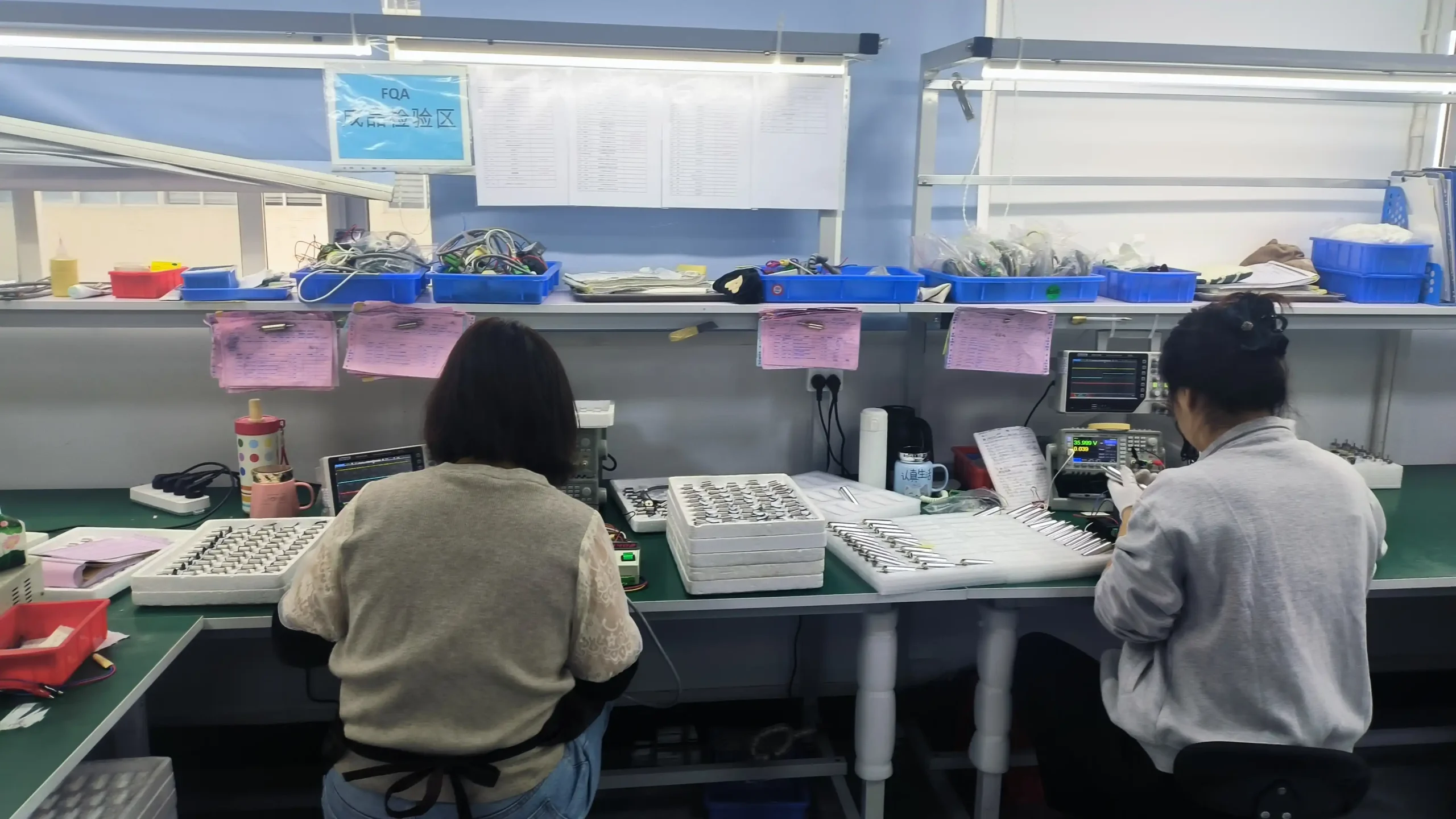
FingerAct worker is doing Dental motor testing and quality inspection in our in-house production line for OEM applications
Integration with Gearbox and Control Systems
In real-world implant systems, engineers often face challenges such as:
- Maintaining performance after repeated sterilization cycles
- Managing heat buildup during continuous operation
- Ensuring compact size without sacrificing power
- Achieving smooth and quiet operation
These factors make motor selection and integration much more complex than standard applications.
Challenges in Real Applications
Integration with Gearbox and Control Systems The motor in an implant system rarely works alone. It is typically integrated with:
Gearboxes → to adjust speed and increase torque
Encoders → to provide position and speed feedback
Controllers / drivers → to manage precise operation This means selecting a motor is not just about specifications — it’s about how well it works within the entire drive system.
A mismatch between motor and gearbox, or poor control integration, can lead to performance issues even if the motor itself is high quality.
What Manufacturers Should Focus On
When designing or sourcing motors for implant systems, it’s important to look beyond basic specs.
Key considerations include:
- Torque consistency under load
- Compatibility with gear reduction systems
- Feedback capability (encoder integration)
- Reliability in medical environments
A well-designed actuator solution is not just a component — it’s a functional part of the entire device system.
Motors in dental implant systems are not just about rotation — they are central to performance, control, and reliability. Understanding how they function within the system helps manufacturers make better design and sourcing decisions.
Looking for the right actuator solution for your dental implant system? We support from motor selection to full integration — including gearbox and control matching.


