

Dental Lab Micromotor Systems: What Really Matters
Dental lab micromotor systems are the backbone of dental laboratory production, widely used for tooth trimming, polishing, grinding, and prosthesis finishing. Unlike clinical chairside motors focused on sterilization, lab micromotors prioritize continuous high-speed stability, long lifespan, and consistent output under prolonged load. For dental device OEMs designing lab grinding units and polishing equipment, many standard micromotors fail to meet long-hour industrial working conditions. This article breaks down what truly matters in dental lab micromotor systems, covering core performance criteria, critical design parameters, and common engineering pitfalls to help you build durable, high-efficiency dental lab equipment.
Key Performance Requirements for Dental Lab Micromotor Systems
Key Performance Requirements for Dental Lab Micromotor Systems
1. Stable High-Speed Performance
2. Continuous Working Lifespan
3. Low Vibration and Low Noise
4. Heat Dissipation Capability
Brushed vs Brushless: Which Is Better for Dental Lab Use?
-
Brushed Micromotors: Low upfront cost, simple driving structure. However, mechanical friction causes rapid wear, unstable speed after long use, obvious heat generation, and frequent maintenance replacement. Suitable only for low-frequency, entry-level lab devices.
-
Brushless Micromotors: No mechanical wear, ultra-stable speed output, lower vibration and noise, and stronger heat resistance. They support 24-hour intermittent continuous operation, perfectly matching batch processing needs of dental laboratories. It is the mainstream solution for current high-quality dental lab equipment.
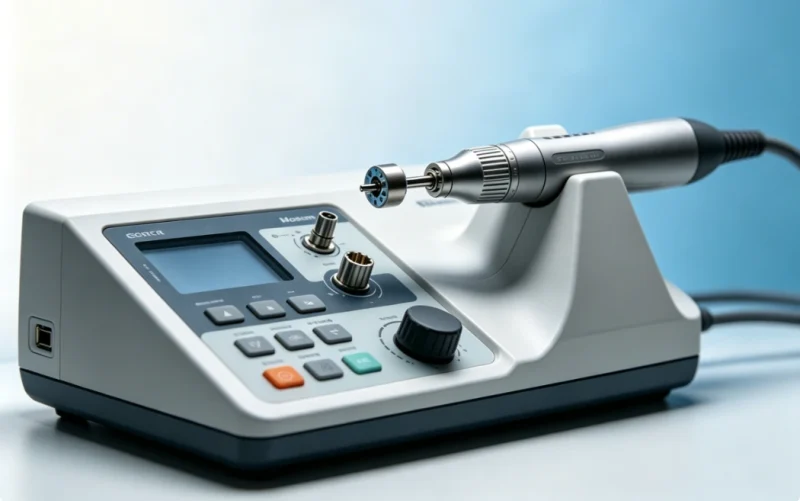
A professional dental lab micromotor system for precision grinding, polishing, and carving dental prosthetics with variable speed control.
Common Integration Challenges for OEMs
Common Integration Challenges for OEMs
-
Speed and Torque Conflict: High speed usually brings reduced torque. Many poorly matched systems result in insufficient grinding force at high speed, unable to handle hard alloy and porcelain materials.
-
Heat Accumulation in Compact Structure: Lab equipment requires compact size, leaving limited internal space for heat dissipation, which puts forward higher requirements for motor structural optimization.
-
Driver-Motor Mismatch: Ordinary universal drivers cannot achieve precise closed-loop speed regulation, resulting in fluctuating speed during grinding and affecting processing consistency.
Common Mistakes in Lab Micromotor Selection
Common Mistakes in Lab Micromotor Selection
-
Only focusing on maximum speed: Many suppliers label ultra-high maximum RPM, but ignore speed stability under load. The actual working speed is far lower than the nominal parameter, leading to poor grinding effect.
-
Confusing clinical motor with lab motor: Clinical handpiece motors focus on sterilization, while lab motors prioritize continuous stability. Blind replacement will cause short service life and frequent failures.
-
Ignoring long-term heat resistance: Short-term test data cannot simulate long-hour lab working conditions. Motors without high-temperature resistance design will rapidly decay in performance after weeks of continuous use.
Quick Selection Checklist for Dental Lab Micromotor Systems
Quick Selection Checklist for Dental Lab Micromotor Systems
-
☑️ Confirm load-bearing speed stability, not just no-load maximum speed
-
☑️ Prioritize brushless structure for long service life and low maintenance
-
☑️ Verify continuous heat dissipation and high-temperature resistance performance
-
☑️ Check low vibration design to ensure fine processing accuracy
-
☑️ Match professional driver for closed-loop speed regulation
For dental lab micromotor systems, nominal speed and low price are not the core competitiveness. What really matters is load stability, continuous working reliability, low vibration precision, and long-term durability. These hidden technical indicators directly determine equipment quality, after-sales cost, and end-user experience. FingerAct provides professional customized micromotor solutions for dental lab equipment OEMs, including motor parameter optimization, driver matching, and structural integration support. We help manufacturers develop stable, low-loss, high-precision dental lab micromotor systems. Contact us to get tailored motor design and technical consultation for your lab equipment projects.


