
How to Select the Right Motor for Dental Implant Systems
Dental implant device OEMs often struggle with dental motor selection: balancing torque, speed, and sterilization while fitting the whole system design. The wrong motor raises costs, delays launches, or causes device failure. This guide simplifies critical factors for better choices. With deep experience supporting dental OEMs, FingerAct understands the real-world integration needs of dental implant motors.
Key Requirements for Dental Implant Motors
Torque stability matters more than maximum speed. Implant motors need stable torque under changing loads—too much risks bone damage, too little leads to unstable implants. Typical range: 20–60 N·cm, adjustable for bone density and implant size.
Speed must match two surgical phases:
• Drilling: 500–2000 rpm
• Implant placement: 10–50 rpm
Look for smooth, low-vibration rotation for precision.
Sterilization compatibility is non-negotiable. Motors must withstand repeated autoclave at 134°C / 2 bar with sealed, corrosion-resistant construction to maintain performance.
Brushed vs. Brushless Motors
Brushed Motors
• Lower cost, simple integration
• Shorter life, brush wear, higher maintenance
• Not ideal for frequent sterilization
• Best for entry-level, low-use devices
Brushless Motors
• Long life, low maintenance, high stability
• Excellent torque/speed control
• Fully autoclavable, low vibration
• Preferred for premium, high-use systems
FingerAct provides both types and helps you choose based on performance, lifespan, and budget.
Need help selecting the right motor? Email your requirements to info@fingeractuation.com
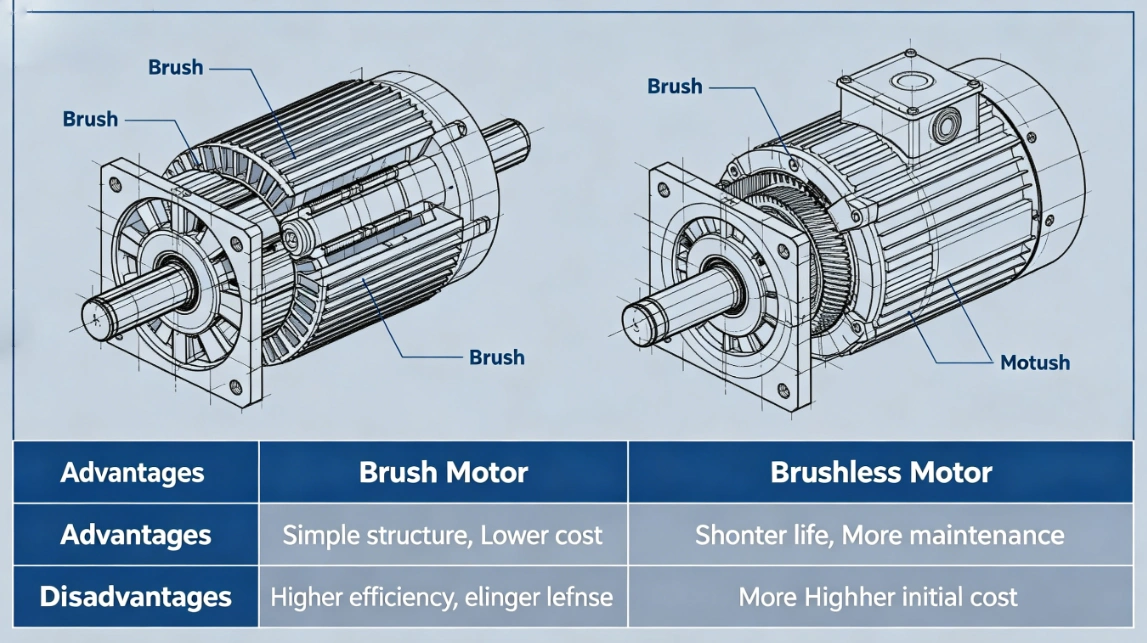
brushed vs brushless motor comparison for dental implant systems
Integration Challenges
The motor rarely works alone—it pairs with gearboxes, encoders, and drivers.
• Encoder integration: Compact, high-precision feedback for position and speed
• Driver matching: Ensures stable, safe performance without overheating
• Space constraints: Small form factor without losing torque or speed
FingerAct solves these with miniaturized components, pre-matched drive systems, and custom sizing for dental devices.
Quick Selection Checklist
✅ Confirm torque (20–60 N·cm) and speed ranges
✅ Choose brushed/brushless based on sterilization & durability
✅ Verify autoclave compatibility (134°C, 2 bar)
✅ Check encoder & driver integration
✅ Ensure compact size fits your device design
Common Mistakes to Avoid
1.Cost over performance – Low-cost brushed motors fail in high-precision, high-use systems
2.Ignoring sterilization – Unsealed motors degrade and risk contamination
3.Overlooking integration – Late gearbox/encoder/driver planning causes delays
4.One-size-fits-all – Generic motors perform poorly in custom implant tools
Work with suppliers early to align motor design with your device.
Selecting the right dental implant motor means balancing torque stability, speed control, sterilization, and system integration. The right choice improves safety, reliability, and time-to-market.
We support dental device manufacturers in motor selection, integration, and customization.Contact FingerAct to discuss your implant motor requirements and get OEM‑tailored support.
Looking for a custom motor solution for your dental implant device?
We support OEMs from motor selection to full integration, including gearbox and control matching. 🛠️


