
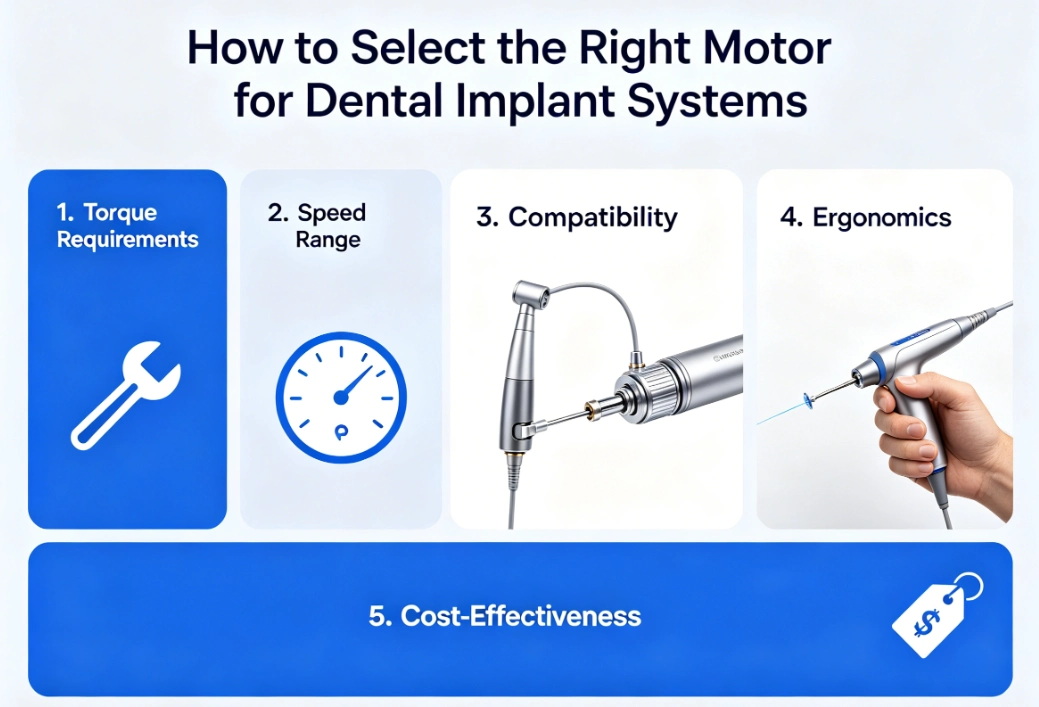
How to Select the Right Motor for Dental Implant Systems
For dental device OEMs and engineers tasked with designing dental implant systems, selecting the right motor is a critical yet challenging step. The core pain point lies in balancing three key factors: torque stability, speed control, and sterilization compatibility—all while fitting the motor into the compact space of implant devices and ensuring seamless integration with gearboxes, drivers, and encoders. Many OEMs struggle to navigate these conflicting requirements, leading to delayed development timelines or devices that fail to meet clinical standards. This guide breaks down the step-by-step process to select the right motor for your dental implant system, focusing on practical engineering insights and integration logic—so you can avoid common pitfalls and build a reliable, high-performance device. With deep expertise in dental motor design and OEM integration, FingerAct understands the unique challenges of implant system development and is ready to support your team through every stage.
Key Requirements for Dental Implant Motors
1. Torque Requirements
2. Speed Control
Speed control is essential for dental implant motors, as different clinical procedures require varying rotational speeds to ensure precision and safety. Unlike general industrial motors, dental implant motors must offer adjustable speed regulation to accommodate the distinct stages of implant placement, from pilot drilling to final seating.
Optimal speed ranges for key clinical procedures:
Pilot Drilling: 800–1200 RPM — Lower speed reduces bone damage and ensures precise hole placement, which is critical for subsequent implant seating.
Countersinking: 500–800 RPM — Moderate speed balances efficiency and precision, preventing overheating of bone tissue during platform preparation.
Implant Seating: 30–50 RPM — Slow, controlled speed allows for accurate torque application, avoiding over-tightening and ensuring the implant is secured without damaging surrounding bone.
A key requirement for dental implant motors is smooth acceleration and deceleration. Abrupt speed changes can compromise clinical precision and cause hand fatigue for clinicians, so the motor must maintain stable speed output even under variable loads. This is where brushless motors excel—they offer superior speed control compared to brushed alternatives, ensuring consistent performance throughout the procedure.
3. Sterilization Compatibility
Integration Challenges for Dental Implant Motors (and How to Overcome Them)
Even with the right motor selected, integration into dental implant systems presents unique challenges—primarily due to the compact size of implant devices and the need for seamless coordination with other components. Below are the most common integration challenges and practical solutions:
1. Space Constraints
Dental implant handpieces and devices are compact, requiring motors that are small in size (diameter ≤ 20mm) while still delivering the required torque and speed. Many OEMs struggle to balance size and performance, leading to compromised motor output or device design.
Solution: Partner with a supplier that offers custom motor designs—FingerAct can adjust motor length, diameter, and winding configuration to fit your device’s space constraints without sacrificing performance. For example, our compact brushless motors (15–20mm diameter) deliver up to 60 N·cm of torque, ideal for small implant handpieces.
2. Driver and Encoder Integration
Brushless motors require a matching driver/controller and encoder to regulate speed and torque, and integrating these components with your device’s control system can be complex. Poor integration can lead to inconsistent performance, torque fluctuations, or system failure.
Solution: Select a motor supplier that provides full integration support. FingerAct’s engineering team works with your team to match the motor with the right driver and encoder, ensuring seamless communication with your device’s control system. We also provide technical documentation and testing support to streamline integration.
3. Gearbox Compatibility
Many dental implant motors require a gearbox to adjust torque and speed to meet clinical needs, but not all motors are compatible with standard dental gearboxes. Mismatched gear ratios can lead to reduced efficiency, increased vibration, or motor failure.
Solution: Consider gearbox compatibility during motor selection. FingerAct offers motors with integrated gearboxes (customizable gear ratios) or can recommend compatible gearboxes that align with your torque and speed requirements, ensuring optimal performance and efficiency.
Unsure which motor fits your implant system?
Get personalized selection advice → Contact us
Email to info@fingeractuation.com
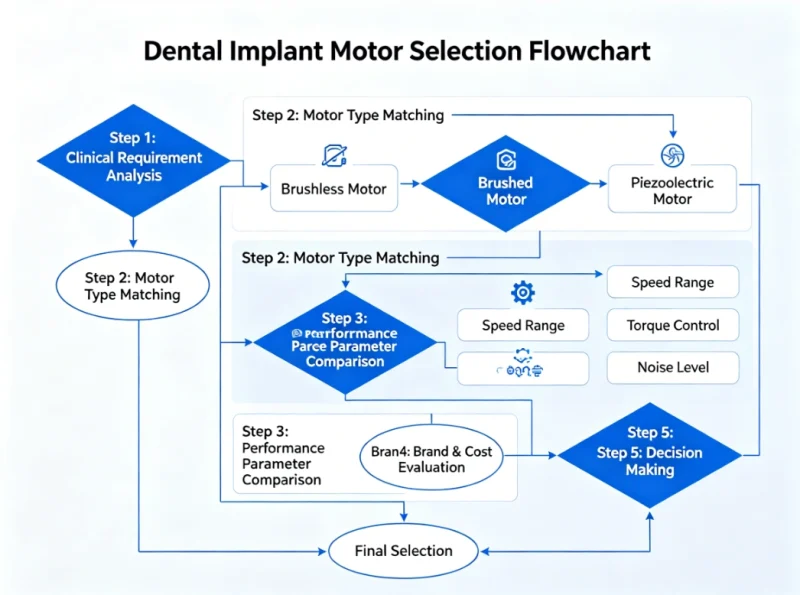
How to select the right motor for dental implant systems
Common Mistakes in Dental Implant Motor Selection
Even experienced OEMs make mistakes when selecting motors for dental implant systems—these errors can lead to delayed development, increased costs, or devices that fail to meet clinical standards. Below are the most common mistakes to avoid:
Mistake 1: Prioritizing Maximum Torque Over Torque Stability
Many OEMs focus solely on a motor’s maximum torque rating, ignoring torque stability under variable loads. A motor that can deliver 60 N·cm but fluctuates significantly during drilling or implant seating is less reliable than a motor that maintains consistent torque at 40 N·cm. Torque stability is critical for clinical safety and predictable outcomes.
Mistake 2: Overlooking Sterilization Compatibility
Failing to select a motor that can withstand frequent autoclave sterilization is a costly mistake. Brushed motors, for example, are not suitable for high-frequency sterilization—brush dust contaminates sterile environments, and the commutator degrades quickly under heat and moisture. This can render your device unsafe for clinical use.
Mistake 3: Ignoring Integration Complexity
Selecting a brushless motor without planning for driver and encoder integration can delay development timelines. Many OEMs underestimate the complexity of integrating these components, leading to compatibility issues and performance problems. Always partner with a supplier that offers integration support.
Mistake 4: Choosing a “One-Size-Fits-All” Motor
There is no universal motor for all dental implant systems. Selecting a standard off-the-shelf motor without considering your device’s unique size, torque, and speed requirements can lead to compromised performance. Custom motor designs are often necessary to meet the specific needs of implant systems.
Quick Selection Checklist
-
☑️ Define your implant system’s torque requirements based on implant size and target bone densities.
-
☑️ Determine the required speed ranges for different clinical procedures (drilling, countersinking, implant seating).
-
☑️ Verify that the motor is compatible with frequent autoclave sterilization (134°C, 2 bar pressure).
-
☑️ Evaluate whether a brushed or brushless motor aligns with your target market and performance needs.
-
☑️ Confirm the motor fits your device’s space constraints (diameter, length).
-
☑️ Check for gearbox, driver, and encoder compatibility, and ensure integration support is available.
-
☑️ Prioritize torque stability over maximum torque rating for clinical reliability.
Streamline Your Dental Implant Motor Selection Process
Selecting the right motor for your dental implant system requires a strategic approach—focusing on core parameters (torque, speed, sterilization), motor type selection, and integration planning. By avoiding common mistakes and prioritizing the unique needs of your device and target market, you can build a reliable, high-performance implant system that meets clinical standards and stands out in the market.
We support dental device manufacturers in motor selection, integration, and customization. Whether you need help defining your motor requirements, selecting the right motor type, or integrating the motor into your implant system, our engineering team is ready to collaborate with you. FingerAct’s expertise in dental motor design and OEM integration ensures that your development process is streamlined, and your device meets the highest standards of clinical performance and reliability. Contact us today to discuss your dental implant motor requirements and get personalized OEM support.


