
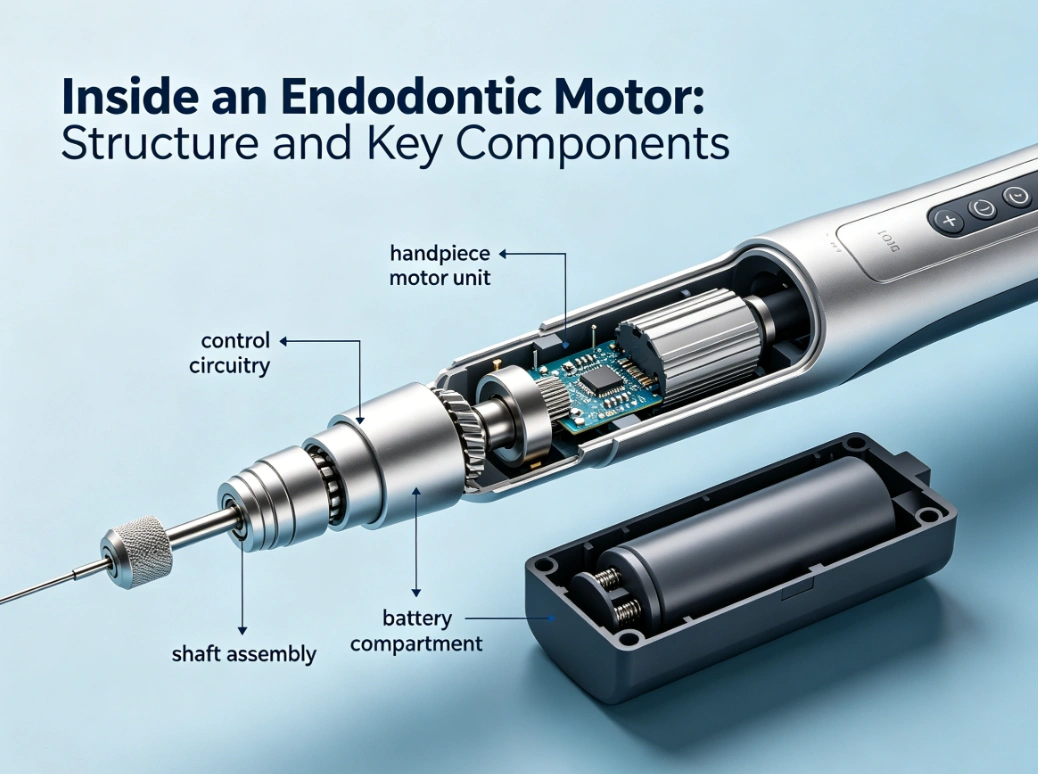
Inside an Endodontic Motor: Structure and Key Components
For dental device OEMs and engineers designing endodontic motors, understanding the internal structure and key components is critical to optimizing performance, ensuring seamless integration, and avoiding common development pitfalls. Endodontic motors—used for precise root canal treatment—require a compact, well-integrated structure that balances power, precision, and sterilization compatibility. Many OEMs struggle to navigate the complex interplay between components (e.g., motor core, encoder, driver) and how they impact clinical performance. This guide breaks down the internal structure of endodontic motors, details the role of each key component, and provides practical engineering insights for integration—helping you design more reliable, clinically effective endodontic devices. With expertise in dental motor development and OEM integration, FingerAct supports you in optimizing component selection and structure design for your endodontic motor projects.
Overall Structure of an Endodontic Motor
Overall Structure of an Endodontic Motor
Endodontic motors feature a compact, modular structure tailored to the demands of root canal procedures—combining power transmission, precision control, and sterilization compatibility. Unlike general industrial motors, their structure is optimized for small size, low vibration, and consistent performance under dynamic loads. The core structure can be divided into four key modules, each working in tandem to deliver precise speed and torque control.
Key Components of an Endodontic Motor (and Their Roles)
1. Motor Core (Stator and Rotor)
-
Stator: Composed of copper windings and magnetic cores, it generates a rotating magnetic field to drive the rotor. For compact endodontic motors, the stator is designed to be small (diameter ≤ 18mm) while maintaining sufficient power output.
-
Rotor: Equipped with permanent magnets, it rotates in response to the stator’s magnetic field. The rotor’s design directly impacts torque stability—optimal rotor balancing reduces vibration, critical for clinical precision.
2. Encoder (Position and Speed Feedback)
-
Type: Optical encoders are preferred for endodontic motors due to their high precision (up to 1000 pulses per revolution) and resistance to moisture/heat from sterilization.
-
Role: It detects the rotor’s position and speed, sending signals to the driver to adjust current and voltage—ensuring stable speed under variable loads (e.g., when the instrument encounters dense dentin).
3. Driver (Motor Control Unit)
-
Function: Adjusts the motor’s speed and torque based on clinical requirements (e.g., lower speed for root canal shaping, higher speed for access opening) and encoder feedback.
-
Integration Note: The driver must be compact to fit within the endodontic handpiece or control unit, while supporting torque limiting—a safety feature to prevent instrument breakage.
4. Gearbox (Torque and Speed Optimization)
-
Gear Ratio: Typically ranges from 10:1 to 30:1—higher ratios for torque-intensive tasks (e.g., shaping curved canals) and lower ratios for high-speed tasks (e.g., access opening).
-
Design Considerations: The gearbox must be small, lightweight, and resistant to sterilization—poorly designed gearboxes cause vibration, noise, and premature failure.
5. Sealing and Housing
-
Sealing: Hermetic seals (e.g., O-rings, laser welding) prevent moisture from entering the motor core, encoder, and driver—avoiding short circuits and component damage.
-
Housing Material: Medical-grade stainless steel or high-temperature plastic, designed to withstand repeated sterilization cycles without warping or degradation.
Need motor selection? Email to info@fingeractuation.com
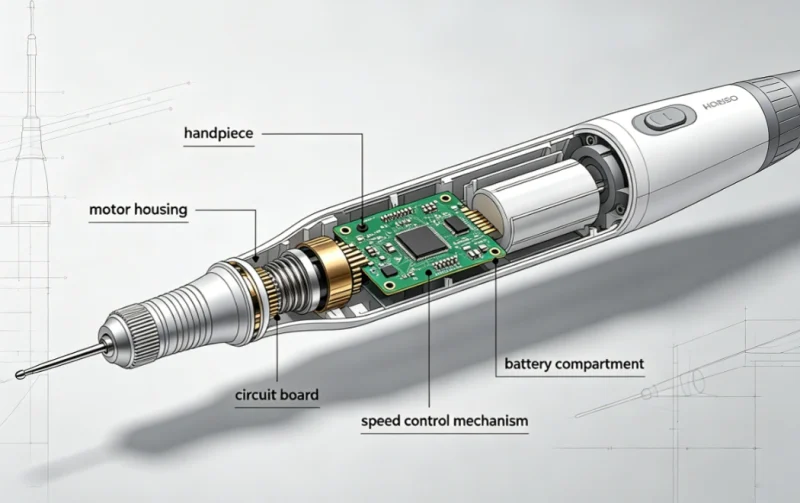
This picture shows the internal structure of an endodontic motor. It displays core functional parts clearly. These key components ensure stable operation and precise dental treatment. It helps professionals learn its working principle and structural composition easily.
Component Integration Challenges (and Solutions)
-
Space Constraints: Solution: Opt for miniaturized components (e.g., compact BLDC motor cores, slim encoders) and custom integration designs. FingerAct offers custom motor cores and gearboxes tailored to tight handpiece dimensions, ensuring performance without sacrificing space.
-
Component Compatibility: Solution: Ensure the encoder, driver, and gearbox are matched to the motor core’s specifications. Mismatched components lead to inconsistent performance, vibration, and torque fluctuations.
-
Sterilization Damage: Solution: Select components rated for high-temperature sterilization and integrate hermetic sealing. Avoid brushed motors, which are prone to damage from brush dust and moisture during autoclaving.
Quick Component Selection Checklist
-
☑️ Choose a BLDC motor core for stability, long lifespan, and sterilization compatibility.
-
☑️ Select a high-precision optical encoder (≥500 pulses per revolution) for precise speed/position control.
-
☑️ Match the driver to the motor core’s voltage and current requirements, with torque limiting features.
-
☑️ Opt for a compact gearbox with a gear ratio aligned to clinical tasks (10:1–30:1).
-
☑️ Ensure hermetic sealing and medical-grade housing for sterilization compatibility.
Common Mistakes in Component Selection
Common Mistakes in Component Selection
-
Overlooking Component Compatibility: Selecting a motor core, encoder, and driver from different suppliers without verifying compatibility leads to integration failures and inconsistent performance.
-
Prioritizing Size Over Performance: Sacrificing motor core power or encoder precision to reduce size results in poor clinical performance (e.g., speed fluctuations, instrument breakage).
-
Ignoring Sterilization Requirements: Choosing components that cannot withstand autoclave sterilization leads to premature failure and increased maintenance costs.
The internal structure and key components of an endodontic motor directly impact its clinical performance, reliability, and integration feasibility. By understanding the role of each component—from the BLDC motor core to the hermetic sealing—and addressing common integration challenges, OEMs can design endodontic motors that meet clinical needs and stand out in the market. FingerAct supports dental device OEMs in component selection, custom integration, and structure optimization, ensuring your endodontic motor delivers consistent, precise performance. We offer expertise in matching components to your device’s unique requirements, streamlining development and reducing time-to-market. Contact us today to discuss your endodontic motor structure and component integration needs.
Looking for the right actuator solution for your dental implant system? We support from motor selection to full integration — including gearbox and control matching.


