
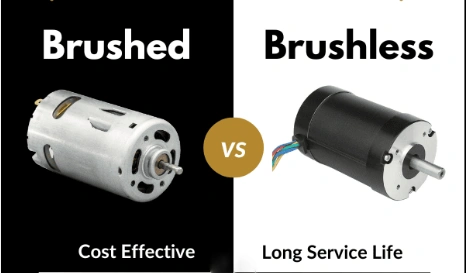
Brushed vs Brushless Motors in Dental Devices: Which One to Choose?
For dental device OEMs and engineers, choosing between brushed and brushless motors is a critical decision that impacts device performance, lifespan, and clinical safety. Many manufacturers struggle to determine which motor type aligns with their dental device’s needs—whether it’s for implant systems, endodontic tools, or dental lab micromotors. This guide breaks down the key differences between brushed and brushless motors, their pros and cons, and how to select the right one for your dental device. With deep expertise in dental motor design and integration, FingerAct helps OEMs navigate this decision to build reliable, high-performance dental equipment.
Key Differences Between Brushed and Brushless Motors
Key Differences Between Brushed and Brushless Motors
1. Design and Operation
2. Performance in Dental Applications
-
Torque Stability: Brushless motors provide more stable torque under variable loads, making them ideal for procedures like dental implant placement or endodontic drilling, where consistent force is essential. Brushed motors may experience torque fluctuations as brushes wear over time.
-
Speed Control: Brushless motors offer precise speed regulation, with smooth acceleration and deceleration—perfect for dental tools that require varying speeds (e.g., drilling vs. implant seating). Brushed motors have less precise speed control and may experience speed drops under heavy loads.
-
Vibration: Brushless motors operate with minimal vibration, reducing hand fatigue for clinicians and improving procedure precision. Brushed motors tend to have more vibration due to mechanical commutation, which can compromise accuracy.
Pros and Cons of Brushed Motors for Dental Devices
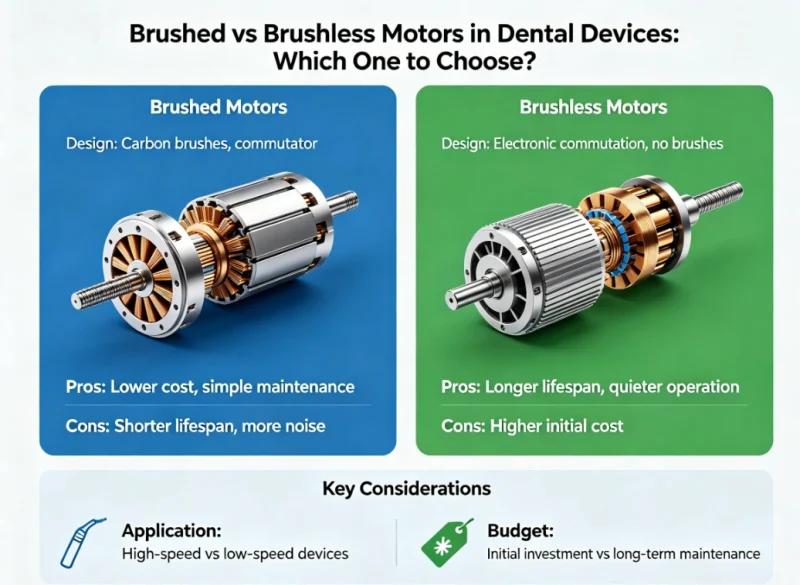
Pros of Brushed Motors
-
Lower Cost: Brushed motors have a simpler design, making them more affordable to manufacture and integrate—ideal for entry-level dental devices or OEMs with tight budget constraints.
-
Easy Integration: Their simple structure requires minimal control electronics, making them easy to integrate into basic dental tools (e.g., low-cost dental handpieces).
-
Immediate Startup: Brushed motors start quickly and require no complex controller setup, making them suitable for applications where instant operation is needed.
Cons of Brushed Motors
-
Shorter Lifespan: Brushes wear down over time, requiring frequent maintenance and replacement—costly for high-use dental devices (e.g., implant systems used daily in clinics).
-
Sterilization Limitations: Brush dust from wear can contaminate sterile clinical environments, and the mechanical commutator is prone to damage from repeated autoclave sterilization. This makes brushed motors less suitable for high-frequency sterilization.
-
Performance Degradation: As brushes wear, torque and speed control degrade, leading to inconsistent performance—critical for clinical procedures that require precision.
Pros and Cons of Brushless Motors for Dental Devices
Brushless motors are the modern choice for high-performance dental devices, offering superior reliability and performance. While they have a higher initial cost, their long-term benefits make them a worthwhile investment for OEMs targeting the mid-to-high-end market.
Pros of Brushless Motors
•Longer Lifespan: No mechanical brushes mean no wear and tear, resulting in a longer lifespan (often 5–10 times that of brushed motors) and lower maintenance costs.
•Sterilization Compatibility: Brushless motors have a sealed design, making them resistant to autoclave sterilization (134°C, 2 bar pressure) without performance degradation. This is critical for dental devices used in sterile clinical environments.
•Superior Performance: Consistent torque, precise speed control, and low vibration make brushless motors ideal for high-precision dental procedures (e.g., implant placement, endodontic treatment).
•Energy Efficiency: Brushless motors are more energy-efficient than brushed motors, reducing power consumption and heat buildup—important for compact dental devices with limited battery life or power supply.
Cons of Brushless Motors
•Higher Initial Cost: The electronic controller and sensors add to the cost, making brushless motors more expensive upfront than brushed motors.
•Complex Integration: Brushless motors require a matching driver/controller for operation, which adds complexity to the integration process. OEMs may need technical support to ensure seamless integration with their device’s control system.
Unsure between brushed vs brushless dental motors?
Email your device needs to info@fingeractuation.com
Get a personalized selection recommendation.
Brushed vs Brushless Motors in Dental Devices: Which One to Choose?
Common Mistakes to Avoid When Choosing Between Brushed and Brushless Motors
Even experienced OEMs can make mistakes when selecting a motor type for their dental device. Avoid these pitfalls to ensure your device meets clinical standards and market needs:
Mistake 1: Prioritizing Cost Over Performance
Choosing a brushed motor solely to save costs can lead to higher long-term maintenance costs, performance issues, and reduced device lifespan. For high-use clinical devices, the upfront cost of a brushless motor is offset by lower maintenance and better reliability.
Mistake 2: Ignoring Sterilization Requirements
Failing to consider sterilization compatibility can render a dental device unsafe for clinical use. Brushed motors are not ideal for frequent autoclave sterilization, so avoid using them in devices that require sterile operation.
Mistake 3: Overlooking Integration Complexity
Brushless motors require a matching driver/controller, and failing to plan for this integration can delay development timelines. Partner with a supplier like FingerAct to ensure seamless integration of the motor and control system.
Mistake 4: Assuming One Size Fits All
Not all brushless or brushed motors are the same. Choose a motor that is specifically designed for dental applications, with the right torque, speed, and size to fit your device’s unique constraints.
How FingerAct Helps You Select the Right Motor
Selecting the right motor for your dental device requires a deep understanding of your device’s requirements, clinical use cases, and market goals. FingerAct supports dental OEMs throughout this process, from motor selection to full integration.
Our services include:
•Motor type assessment: Working with your team to determine whether a brushed or brushless motor is best for your device.
•Customization: Adjusting motor size, torque, speed, and design to fit your device’s unique constraints.
•Integration support: Ensuring the motor (and driver, if needed) integrates seamlessly with your device’s control system, gearbox, and encoder.
•Quality testing: Validating motor performance under real-world dental conditions, including sterilization cycles and variable loads.
Quick Selection Checklist
☑️ Define your device’s target market (entry-level vs. high-end) to narrow down cost considerations.
☑️ Determine the device’s usage frequency and sterilization requirements.
☑️ Evaluate the performance needs (torque stability, speed control, vibration) for your clinical application.
☑️ Consider integration complexity and whether you need support for driver/controller matching.
☑️ Partner with a supplier that specializes in dental motors to ensure compatibility and reliability.
The choice between brushed and brushless motors for dental devices comes down to your device’s specific needs, target market, and clinical requirements. Brushed motors are a cost-effective option for entry-level, low-use devices, while brushless motors are the superior choice for high-performance, clinically focused equipment that requires precision, reliability, and frequent sterilization.
By avoiding common selection mistakes and partnering with an experienced supplier like FingerAct, you can choose the right motor to build a dental device that stands out in the market. We support dental device manufacturers in motor selection, customization, and integration. Whether you need help deciding between brushed and brushless motors or customizing a motor to fit your device, our engineering team is ready to collaborate with you. Contact us today to discuss your dental motor requirements and get personalized OEM support.
Need help choosing the right motor for your dental device?
We support OEMs from motor selection to full integration.


