

Compact Design, Real Performance
Dental devices demand increasingly smaller drive systems without sacrificing power. In high-speed handpieces, limited space creates mechanical and thermal constraints that directly affect motor behavior. A compact motor must deliver sufficient torque while remaining stable within tight dimensional limits.
Power Density and Thermal Balance
When power output increases in a small housing, heat management becomes critical. Higher power density can improve cutting efficiency, but only if temperature rise is controlled. Proper winding design, material selection, and mechanical balancing ensure that compact motors maintain both stability and durability.
In compact dental motors, performance depends on balanced power density and controlled heat—not size reduction alone.
Smaller motors require smarter engineering. Power density must align with thermal limits and load conditions.
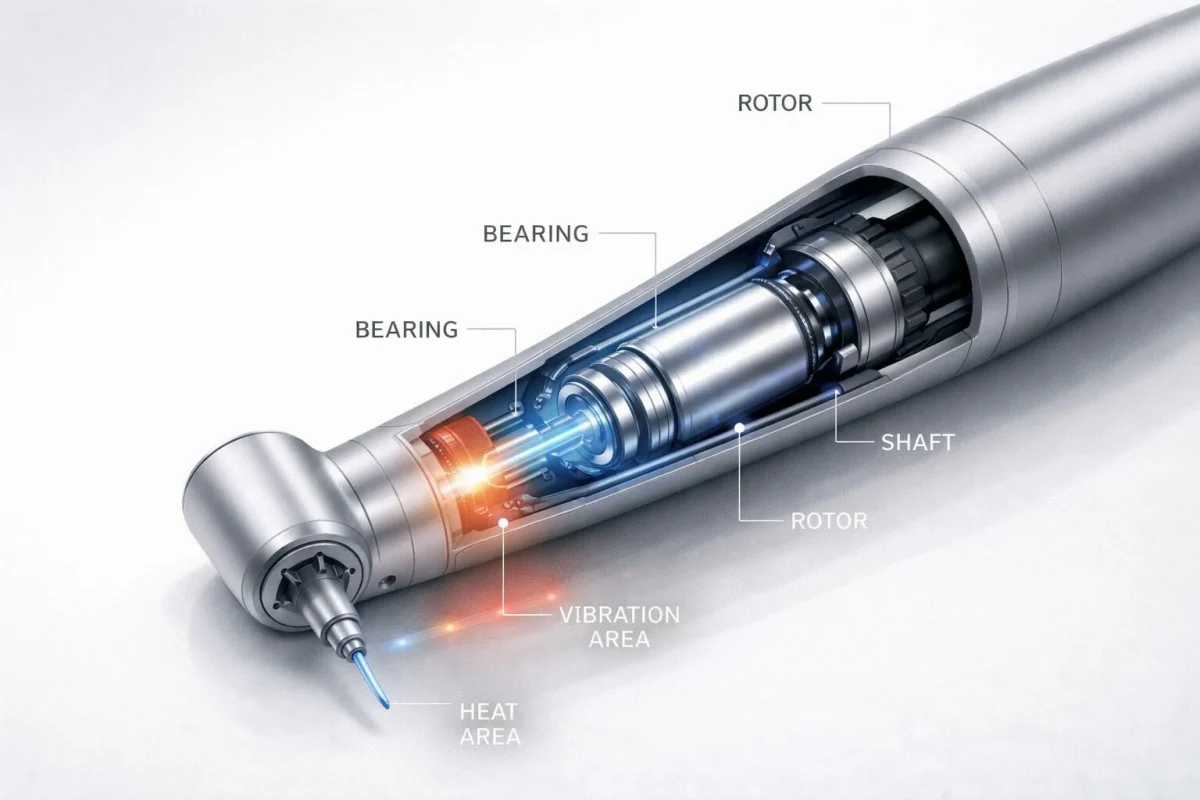
Factors Influencing Size-to-Power Efficiency
The size-to-power ratio is determined by electrical design, magnetic configuration, and mechanical structure. A well-optimized motor converts electrical input into usable torque without excessive heat accumulation. Compact drive systems must operate within realistic load conditions.
Oversizing for peak output or undersizing for cost savings can both reduce long-term reliability.
Designing for Integration
Ultimately, size-to-power ratio is not just a motor specification—it affects how easily the drive integrates into the handpiece system. Proper matching ensures consistent torque delivery, reduced vibration, and predictable lifespan in demanding dental environments.
Effective size-to-power design improves both performance and system integration reliability.
